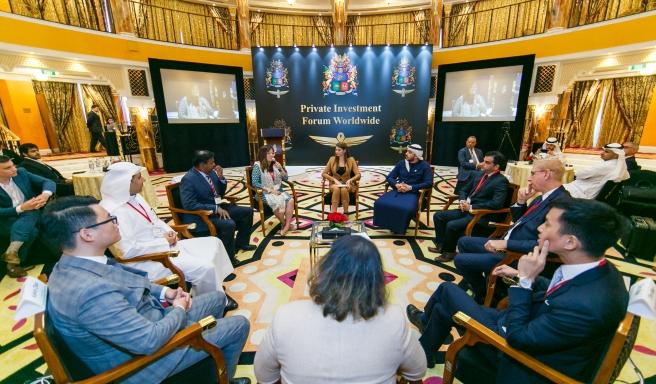

The AI landscape in 2026 is no longer defined by speculative potential but by massive, calculated capital deployment. Following a landmark 2025 where over $200 billion was invested in AI, projections for 2026 have skyrocketed to $700 billion. At the AI Alliance Gathering on February 12, 2026, hosted by the Global Investment Leaders Club, a consensus emerged: the era of "broad foundational models" is giving way to a "vertical AI" focus.
This surge in capital is driving a fundamental redistribution of wealth across the tech stack, as the industry moves from building the basic engines of AI to refining the specific vehicles that use them.
While the early years of the AI boom focused on large language models (LLMs), several investors at the gathering emphasized the "application layer". The sentiment is that infrastructure and foundational LLMs are increasingly crowded or overhyped, whereas niche applications—such as LinkedIn automation or smart appliances—offer more direct value. Investors are increasingly pivoting toward a Vertical AI priority, seeking specialized solutions for complex, domain-specific problems, particularly within B2B sectors like fintech compliance. This shift accompanies a more cautious approach to the market, as 2026 is widely viewed as a "shakeout" year where companies built on hype rather than tangible substance will likely face a harsh reality. Amidst this selective environment, there is a distinct preference—notably among Middle Eastern investors—for treating infrastructure as a "hard asset," focusing capital on the "nuts and bolts" of the industry, such as data centers and chip makers By prioritizing these specific vertical solutions and "hard assets," investors are now demanding proof of performance that translates directly into the bottom line.
The gathering highlighted several startups delivering "tangible ROI," a primary requirement for 2026 investors. Shirish Nimgaonkar, CEO of eBlissAI, addressed the $725 billion annual cost of unplanned IT downtime. By increasing issue resolution automation from 5% to over 60%, Iblis AI claims to deliver a 10x ROI for Fortune 2000 companies. In the sustainability sector, Sascha Rohner of Frugal Tech presented an AI-powered vertical greenhouse system. The technology produces up to 20x more yield per square meter than traditional methods, achieving a gross profit 14x higher than conventional farming. As these AI systems begin to manage our physical resources and IT infrastructure, the focus is expanding from purely operational efficiency to the quality of the human-to-machine connection.
As AI becomes more pervasive, the value of "authentic" interaction has become a premium. Jeanne Lim, CEO of Being AI, noted that AI engagement strategies can lead to 66% higher sales and 25% more loyalty. To combat the rise of fake profiles and repetitive AI-generated content, Being AI is developing cryptographically authenticated "AI Personas". These personas allow brands to create trusted, hyper-personalized interactions on a blockchain-based trust layer. The transition to an AI-driven economy is not without friction.
Despite the promise of high engagement and authenticated personas, the rapid scaling of these technologies is exposing deep-seated social and geographical fractures. Investors raised concerns regarding the "dehumanization" of networking, particularly on platforms like LinkedIn. Investors are increasingly concerned about the "repetitive trap," with Pasi Pohjala, Founder and CEO of ATG observing that many AI-generated messages have become nearly identical and indistinguishable, which threatens to diminish the quality and authenticity of professional interactions. Beyond these communication hurdles, regional bottlenecks remain a significant challenge; Anneliese Sound, Managing Director of Future Potential Management noted that Europe’s slower decision-making and regulatory pace may lead to infrastructure shortages in data center real estate and energy when compared to the rapid growth seen in other markets. To navigate these issues, the industry must address a critical global shortage of AI engineering talent by prioritizing cross-border collaborations and leveraging incubators and accelerators that bridge international talent pools.
Conclusion: Toward "Invisible" AI
The ultimate goal for AI in 2026 is to move from "noisy hype" to becoming a "calm, effective business enabler". Investors are no longer looking for "AI startups" in name only; they are looking for domain experts who integrate AI invisibly into workflows to solve age-old problems in the "real economy," such as roofing, restaurants, and defense.