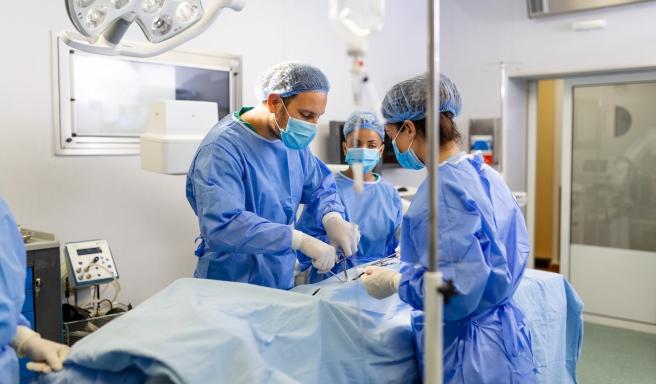

International investors convened at the 258th Private Investors' Forum, organized by the Global Investment Leaders Club, to discuss the high-stakes landscape of surgical innovation. The discussion centered on the shift from incremental improvements to transformative technologies that prioritize clinical utility, provider efficiency, and strategic market positioning.
The surgical device sector is uniquely characterized by its "long cycle"—often requiring 15 years for an idea to reach the patient. Despite these timelines, investors at the gathering emphasized that the demand for innovation is undeniable, as many surgical procedures have gone decades without significant improvement in patient outcomes.
Clinical Utility: Beyond "Bells and Whistles"
A recurring theme among the forum’s participants was the necessity for technologies to solve real-world problems rather than simply offering sophisticated features. Bob Sweeney, Senior Venture Partner of the Global Health Impact Fund, noted that the interface between the user and technology is often a point of failure. "Will this product, no matter how sophisticated it is or how many bells and whistles it carries on it, will it actually make the provider a more effective provider?" Sweeney asked. "If it can't do that or if it won't be accepted or used, then it's a fruitless investment".
This sentiment was echoed by John H Abeles, MD, General Partner of Northlea Partners LLLP, who suggested that the industry must overcome the conservative nature of the medical profession. "Technology is secondary to the utilization and the utility to patients and doctors," Abeles stated. He pointed out that surgical devices often require surgeons to change their procedures or timing, making distributor relationships and a realistic appraisal of market adoption critical for early-stage success.
The Strategy of the Exit: Market Fit and Competition
For many venture partners, the decision to invest is increasingly tied to the projected exit strategy. Ross Morton, Managing Partner at Nodenza, emphasized the importance of understanding the "big four" strategies in the orthopedic and surgical space. "We want to make sure that the investment is a really good fit for them and will ultimately be acquired," Ross explained. He highlighted that products designed to sit alongside existing distributor networks, rather than competing directly against dominant players like Zimmer or Stryker, often find a smoother path to acquisition.
Derek Keogh, a CFO, noted that while seed capital is necessary, "realistic exit plans" remain the most problematic unknown quantity. This emphasizes a shift toward rigorous due diligence regarding a company's go-to-market plan and its ability to execute within a complex regulatory environment.
Digital Transformation and "Physical AI"
The integration of AI and robotics into the operating room was identified as a primary trend for 2026, though with a focus on tangible impact. Soyoung Park, General Partner of 1004 Venture Partners, spoke of the rise of "physical AI" and humanoid robotics as solutions for future labor shortages in the health sector. Similarly, Manuk Hergnyan, Co-founder and Managing Partner of Granatus Ventures, highlighted the need for "transformative" solutions over incremental ones. "If a solution provides an increment of 20% or even 50% improvement... that is probably not good enough to overcome the bureaucracy and inertia which is dominant in the system," Hergnyan observed.
Case Study: Solving the "Smoke Screen"
One example of transformative technology presented at the forum was Novuson Surgical Inc., led by CEO Stuart Mitchell. The company’s surgical energy platform uses sound to eliminate the excess burning of tissue and the resulting smoke that often obscures a surgeon's view. Mitchell noted that current electrosurgical devices lead to approximately 250,000 complications per year in the U.S. alone, increasing long-term costs and procedure times. By "clearing the smoke screen," such innovations aim to reduce these complications and improve operating room visibility.
Conclusion: A Global Vision for Healthcare
The forum concluded with a look toward the "majority world," including markets in Latin America and Africa. Marc Flohr, Executive Board Member at Mingenta, emphasized that for innovations to be truly impactful, they must be accessible and capable of being integrated into hospital operations on a global scale. As the industry moves forward, the consensus among global investors is clear: the most successful surgical innovations of 2026 will be those that marry deep scientific research with a profound understanding of the clinical environment and the people who operate within it