
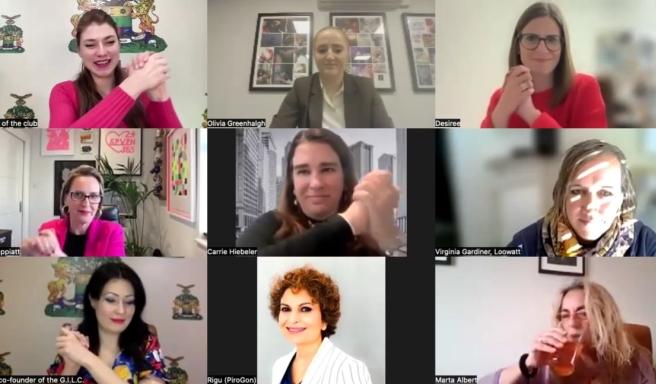
The landscape of global investment is undergoing a profound transformation. But it is not only driven by shifting capital but by a deliberate move toward a more united front of female leadership. At the 261st Powerful Women in Investment gathering, there was a clear consensus among the participants. While female participation in investment is rising, the transition from social networking to high-level professional collaboration remains the next vital hurdle.
Redefining Professional Collaboration
A recurring theme throughout the discussion was the distinction between social interaction and professional networking. Anneliese Sound, Managing Director of Future Potential Management, noted the rarity of women in executive circles and expressed a desire for a shift in how female investors engage. "I would actually wish that women would collaborate more on a professional level," Anneliese remarked, observing that female-led gatherings in Europe often drift into personal discussions rather than focusing on "discussing business options to earn money... and then also to do good for others." She further highlighted a critical shortage of female founders in high-stakes technical areas like pharmaceuticals, chemicals, and defense, noting that while female founders are prevalent in consumer goods, they must become "stronger and more courageous" in deep tech sectors. This emphasis on collaboration was reinforced by Marsha Wulf, Founding Director & Managing Partner of LoftyInc Capital Management, who cautioned against viewing female-only participation as a standalone solution, noting that “all women decision-making bodies are not any more successful on average… it’s together that our strengths are able to prevent disasters and enhance success,” underscoring that true progress lies in learning how to work effectively across perspectives.
The Matriarchal Shift and the Great Wealth Transfer
The conversation also pivoted toward the unique perspectives women bring to the cap table. Wendy Craft, CEO of Elle Family Office, emphasized the tangible differences in investment styles. "Matriarchal investment is very different from patriarchal investment," she explained, citing studies on risk tolerance, alpha versus beta preferences, and long-term legacy planning. With trillions of dollars expected to shift into female hands over the next decade, Wendy argued that those who ignore these "subtle differences in how they view what you're putting in front of them are going to lose out."
Another investor echoed this sentiment, focusing on the "great wealth transfer" and the need to draw more women into venture investing as Limited Partners (LPs). Alaina posited that increasing female influence at the LP level would naturally lead to "more money likely going to women entrepreneurs" and more women reaching leadership positions.
Navigating Systemic Barriers in Specialized Sectors
Despite the optimism, speakers addressed the "tragic" difficulties female founders face as they scale. A founder and chief investment officer at a leading investment firm, observed that while seed-stage companies often enjoy balanced gender representation, the "further you go along in terms of the growth of a company, it seems as if the fewer and fewer people you find that are willing to invest in women." She further emphasized the importance of collaboration over division, noting that her approach is “much more of unity than of separation,” particularly in business contexts where diverse perspectives strengthen outcomes.
In the healthcare and real estate sectors, Carrie Hiebeler, Co-Founder, Managing Partner of Greene Park Capital noted a disconnect between investors and end-users. In senior housing—a sector where women are the primary residents—investment decisions are still dominated by men. “The preferences of elderly women are changing - largely it is women in the seniors housing buildings" Hiebeler noted, emphasizing the need for more female voices in sectors where they possess the most direct user insight.
Conclusion: Leading by Doing
The gathering concluded with a dual perspective on how to achieve parity. While Leticia Bombieri, Investor at Invus Opportunities emphasized that "it’s super important to have female investors so that female founders get funded" because women often recognize needs that men overlook, Anat Naschitz, Managing Partner of 9vc offered a philosophy of "leading by doing." Anat argued that focusing on substance (delete - and content) while "ignoring gender" is often the most effective way to yield results in competitive fields like life sciences, and that collaborations and mutual support tend to occur naturally among likeminded people. Regardless of the approach, the 261st gathering underscored that the future of investment lies in a collaborative, professional, and globally connected network of women ready to turn "bold ideas into scalable and lucrative businesses."