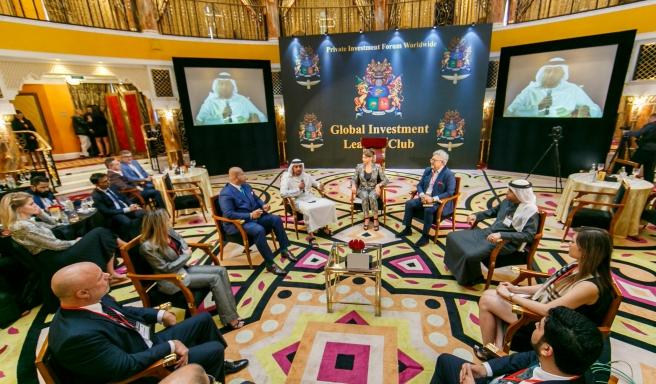

The 263rd Global Investment Leaders Club summit convened a distinguished assembly of international investors to dissect the shifting paradigms of the global economy. Under the moderation of club leader Lisa, the dialogue moved beyond mere market analysis, exploring the intersection of geopolitical volatility, energy constraints, and technological empowerment. As the world navigates the complexities of early 2026, the consensus among participants was clear: the current global crises serve as a transformative "wake-up call" for strategic self-sufficiency.
Asia and the Energy-Tech Nexus
The discussion highlighted a significant shift in the Asian investment landscape, primarily driven by energy demands and the AI revolution. In Southeast Asia, particularly Singapore, Malaysia, and Thailand, the focus has pivoted toward infrastructure that can sustain high-power computing. Karan Saraf, an investor at 65 Equity Partners, an investor based in Singapore, observed that energy has become a localized survival subject: "Wherever there is surplus of energy is where you'll see data centers come up in the next 5 10 15 years simply because AI consumes a ton of energy".
In China, the narrative is one of rapid transition and technological disruption. Weijia Fu, Founding Partner of New Chapter Ventures, an investor focused on EV charging networks, noted that China now derives at least half of its energy from renewable sources like solar and wind. Beyond green energy, the Chinese market is seeing "hot money" flow into robotics and AI chips. Weijia emphasized the empowering nature of these advancements, stating, "This artificial intelligence, this new technology, actually gives everybody the right to make some changes".
Resilience in the Middle East and Israel
Despite regional uncertainties, the Middle East, specifically the UAE, remains a robust hub for international trade and logistics. Adel Alawadhi, Co-Founder & Chairman at The Corporate Group, shared an optimistic outlook on business resumption: "The region is back to normal, people are resuming and back to business, and we're looking forward". He pointed to real estate and co-investment as key areas where "downsides in the business" are creating prime entry points for savvy investors.
The Israeli market continues to show remarkable resilience, particularly in defense, cybersecurity, and life sciences. An investor noted that while foreign capital has slowed due to the geopolitical situation, the underlying strength of the tech sector remains intact. "The war has actually been able to show... that the tech side in Israel is very strong and really performed during the war," the attendee remarked, forecasting a significant rebound in biotech once stability returns.
Europe’s Push for Independence
The European outlook, discussed through the lens of Switzerland and the UK, is increasingly defined by a desire for strategic independence. Werner Schuenemann, Managing Partner at Xandance & Partners highlighted the importance of securing basic resources: "Food and energy are absolutely key. We have to stay independent in each and every region that trusts one another". He specifically pointed to land-based fish farming as a vital alternative for food security.
Meanwhile, George Gallagher MIoD, CEO of Enteral Access Technologies, described an "interesting time" marked by a struggling venture capital environment. He observed that VCs in the UK are currently "struggling to raise money" and urged the region to "pull its socks up" to remain competitive in the global landscape.
Australia’s Strategic Transition
Australia is currently grappling with the material impacts of global inflation, rising interest rates, and energy shortages. Craig Astill, Founder & Chief Executive of Caason Group, framed these challenges as a catalyst for change. "This crisis has been an excellent wakeup call," Craig noted, arguing that the country must transition toward better food production and internalize its energy capabilities. He specifically advocated for a return to organic farming practices to reduce reliance on fragile global fertilizer supply chains.
Conclusion: The Power of the Network
The summit concluded with a reflection on the unique value of the Global Investment Leaders Club in navigating these turbulent times. As Craig Astill noted, the club provides a "convivial environment of like-minded people" who offer support on both the investment and funding sides, ensuring that even in an era of global shifts, connection remains a primary source of strategic power.