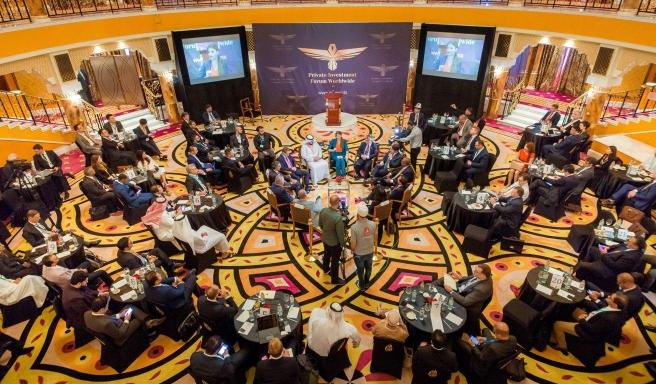

The 267th Global Investment Leaders Summit, titled 'What’s Hot, What’s Not,' recently convened a prestigious group of international allocators to address the evolving complexities of the global market. Against a backdrop of rapid technological advancement and volatile international relations, the gathering served as a forum for investors from America, Europe, Asia, and beyond to share how they are recalibrating their strategies for an era defined by uncertainty. The primary focus was not merely on survival, but on identifying the specific pockets of innovation that thrive during periods of transition.
Innovation Through Uncertainty
A recurring theme throughout the summit was the idea that market disruptions often act as a catalyst for breakthrough technologies. Ian Valentine, Partner at McKenny McFarlane Capital, suggested that the current economic climate requires a return to foundational principles rather than following the "status quo" of high-volume, speculative investing. "I’ve always felt that at times of uncertainty, like the 2009 crash, which we’ve all lived through, that’s where innovation happens," Valentine noted. He advocated for a highly strategic, "surgical" approach, focusing on a close network and realizable opportunities rather than taking outsized risks in an unpredictable economy.
Maintaining a Decadal Horizon
While geopolitical shifts can cause immediate market ripples, several participants emphasized the importance of maintaining a long-term perspective. Elizabeth Addonizio, Investor, highlighted that the nature of direct investing inherently favors those who can look past temporal "cross-currents". "The great thing about doing directs is that it’s usually at least a five-to-seven, if not eight, nine, ten-year play," she shared, expressing hope that today's political distress will eventually give way to more stable waters.
This sentiment was mirrored by a venture capital founder who focuses on medtech investments in the US heartland. Heinz argued that while government cycles and political climates shift every four years, successful venture capital requires sticking to a well-researched thesis. "It’s most important to focus on our long-term goals, the investment thesis that we’ve set out... and really stick to that because I know that through the research we’ve done that what we’re focusing on is really needed in the marketplace," he explained.
Infrastructure and European Dynamics
The conversation also delved into regional challenges, particularly within Europe. Anneliese Sound, Managing Director of Future Potential Management, discussed the intersection of geopolitical shifts with social-economical factors like aging populations and energy scarcity. Sound pointed out that energy infrastructure is now a prerequisite for national wealth: "You can’t be a rich country without having energy. There is no rich country not having enough energy". She also noted a significant shift in the AI sector, where major firms are moving toward "industrializing private capital for AI" through platform services and specialized investment vehicles.
The Hardware Resurgence and Defensive Moats
In contrast to the software-heavy focus of recent years, some investors find renewed value in the "physicality" of technology. Cvic Innocent, Managing Partner at Frankenbuild Ventures, funds inevitable dual-use tech as the limitations of legacy systems became apparent in the age of AI. Focusing exclusively on frontier and "first of a kind" tech, including robotics in space and ocean tech, her firm specializes in "looking around the bend" to be in the 3% of global investors supporting the necessary foundation the new-age tech revolution requires.
Meanwhile, Colin Weston, General Partner at NewFin Capital, adopted a more defensive posture in response to macro-inflationary pressures. Citing concerns over sustained high oil prices, Weston has shifted allocations in public markets toward sectors that remain neutral or benefit during downturns. For early stage investing he noted: "I think there’s moats that can be built around fintech in particular because of the regulation," emphasizing the value of understanding specific verticals in a defensive market.
The Barbell Strategy and Market Herd Mentality
Another investor provided a critical look at the behavior of modern allocators, noting a "barbell approach" where capital is concentrated in either mega-funds or very small, sub-$50 million funds. Binns argued that this creates a "missing middle" and a unique opportunity for those willing to diverge from the pack. "The thinking these days among allocators is starting to feel just too similar," she observed, suggesting that the most significant opportunities may lie in A, B, and C stage funds that are currently being overlooked by the broader community.
Dual Use and the New Cold War
Finally, the summit touched on the increasing necessity of "dual use" technologies, innovations that serve both commercial and national security purposes. Brian Rabben, Founder & Managing General Partner of Rabben Hood Ventures, agreed that specialized hardware can promote stability, focusing on "humanist deep tech hardware" that leverages geographically protected resources to decrease political tension.
By the conclusion of the 267th Summit, it was evident that while the landscape is shifting, the path forward involves a combination of sector expertise, long-term patience, and the courage to invest in the very changes that create uncertainty.