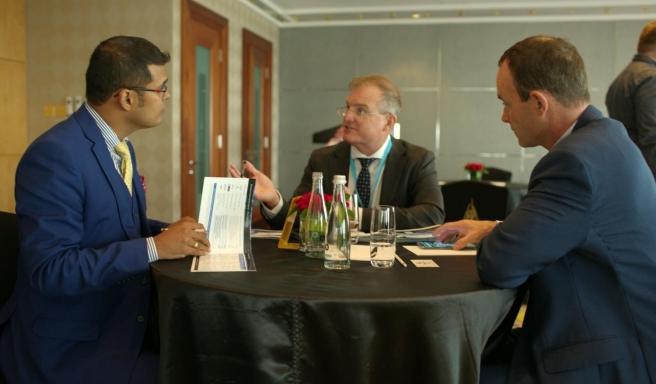

The Global Investment Leaders Club summit convened a distinguished assembly of international investors to dissect the shifting paradigms of the global economy. The dialogue moved beyond mere market analysis, exploring the intersection of macroeconomic pressures, regional adaptations, and emerging sector opportunities. As the world navigates the complexities of 2026, the consensus among participants highlighted a strategic pivot toward resilience, where regional economic challenges are being actively transformed into prime investment entry points.
Egypt and the Tech Outsourcing Boom
The discussion highlighted a significant shift in the North African investment landscape, primarily driven by currency adjustments and a booming digital workforce. In Egypt, the macroeconomic narrative is currently dominated by high inflation and currency devaluation. However, a Founder of an investment firm observed that these challenges have catalyzed an unprecedented opportunity for export-oriented sectors. "With a population of over 105 million, mostly consisting of tech-savvy youth, Egypt is rapidly transforming into a premier global hub for technology and engineering outsourcing," he noted. He emphasized that because operational costs are anchored in local currency while revenues are generated in foreign currencies like USD, tech startups and digital infrastructure projects are experiencing accelerated growth.
Spain’s Strategic Assets and Energy Transition
The Southern European perspective focused heavily on the Iberian Peninsula, where rising interest rates and inflationary pressures have altered traditional market dynamics. In Spain, while the residential real estate sector has experienced a noticeable slowdown due to elevated mortgage costs, other segments continue to thrive. Pablo Prieto, Managing Director of CG Health, pointed out that international capital remains highly active in specific high-value pockets. "The hospitality, tourism, and luxury real estate sectors are showing remarkable resilience, driven consistently by foreign demand," Pablo remarked. Furthermore, he highlighted that Spain's aggressive push toward green energy independence has turned its solar and photovoltaic sectors into massive capital magnets, offering stable, long-term returns.
Valuation Corrections and Market Realism in the UK
In the United Kingdom and broader Northern European markets, the venture capital and private equity landscapes are undergoing a major structural correction. Valuations across the technology sector have dropped significantly from their historic peaks, a shift that market participants view as a necessary stabilization. Mark Lewis, Director of LIS Direct Ventures, framed this deflation not as a crisis, but as a healthy return to fundamentals. "The current correction is forcing companies to abandon cash-burning growth models and pivot strictly toward profitability and sustainable business operations," Mark explained. He noted that for discerning investors, this environment creates an exceptional vintage year to deploy capital into deep tech, cybersecurity, and B2B SaaS enterprises at highly realistic entry valuations.
Southeast Asia’s AI Infrastructure Expansion
From Southeast Asia, Hoay Beng Ooi, Managing Director of Falconcrest Limited, highlighted a major surge in AI-driven infrastructure investment across Malaysia and Singapore. "I see a lot of activity in the AI data center space. A lot of investors are coming in building data centers, and with it comes other infrastructure assets like power plants and water supply," Ooi explained. He added that Singapore is increasingly participating as a co-investor in these projects while the broader region experiences strong momentum in renewable energy and digital infrastructure. "There’s a lot of opportunity available in Malaysia and the region," he stated, while also noting concerns around shortages of power capacity and skilled personnel.
Switzerland and Europe’s Structural Pressures
Werner Schuenemann, Managing Partner of Xandance & Partners, addressed growing concerns surrounding economic stability in Switzerland and Europe. He pointed to Switzerland’s upcoming referendum on limiting the national population to 10 million as a potentially transformative event for the country’s labor market and long-term growth trajectory. "Switzerland is very dependent on foreign talent because, like most western countries, it doesn’t have the birth rates anymore to supply the homegrown workforce," Schuenemann said. He further noted that broader European concerns, including slowing economic growth and structural stagnation in Germany, continue to weigh on investor sentiment.
At the same time, Schuenemann stressed that sectors tied to food security and sustainability remain highly resilient despite geopolitical instability. "Nine billion people have to eat. People in the western world are becoming more conscious about sustainability, and there are many projects that fill these requirements," he remarked. Schuenemann also highlighted his focus on sustainable aquaculture investments, including Germany’s first large-scale land-based salmon farming operation.
Canada’s Innovation Nationalism
A Co-Founder and a Partner of a venture capital firm described a major strategic shift underway in Canada’s investment climate. "We are coming to terms with the breakup of our long-standing relationship with our neighbor to the south and the inability to rely on coherent economic policy there," He stated. He explained that Canada is increasingly strengthening relationships with Europe, the United Kingdom, Commonwealth nations, and China, while simultaneously investing more aggressively in domestic innovation ecosystems. "There seems to be a renewed nationalistic effort around investing in innovation and building up our own internal innovation capacity," he added.
Puerto Rico’s Tax-Driven Capital Migration
A CEO from Puerto Rico shared insights into Puerto Rico’s evolving role as a strategic financial hub for U.S. investors. "Puerto Rico decided in 2012 to reduce capital gains to zero for new residents who meet certain criteria," He explained. He noted that the territory’s tax structure has stimulated economic activity across real estate, hospitality, restaurants, legal services, accounting, and export-oriented businesses. "Puerto Rico needs these niche areas in order to fight the economic pain that it suffered after Hurricane Maria," He stated. He also emphasized that these incentives are helping counter population decline and professional brain drain from the island.
Australia’s Economic Contradictions
Craig Astill, Founder & Chief Executive of Caason Group, offered a candid assessment of Australia’s increasingly difficult economic environment. "We are now the most highly taxed state and country in the world, which is extraordinary," Astill remarked. He pointed to rising inflation, consecutive interest rate hikes, growing unemployment, and mounting pressure on property markets as major concerns impacting Australia’s competitiveness.
Astill explained that his family office has significantly increased its international exposure while moving away from Australian property markets and toward agriculture, food production, and agri-tech investments. "We are seeing many changing patterns and an awareness that we are what we eat," he noted. He also highlighted the growing importance of AI, robotics, and sustainable food systems in long-term investment strategies.
India’s Climate Tech Transformation
Guneet Banga, Co-Founder and Managing Partner of Parinama Ventures, outlined India’s growing importance in the global climate investment landscape. "After the US and China, India is the third most important country that needs to get to net zero," Banga explained. He emphasized that India’s young, educated, English-speaking workforce and rapidly growing middle class create substantial long-term opportunities for investors.
"India has the largest population in the world, it will be the largest economy by 2040, and it has the largest single consumer block in the world," he said. Banga also highlighted that technologies developed to solve India’s climate and infrastructure challenges can often be scaled across other developing nations. "If you can solve an issue in India, you can pretty much put that technology anywhere," he added.
Impact Investing and Climate Innovation
Additionally, a Co-Founder and a CEO of an impact investment advisory firm from the UK discussed the continued growth of impact investing and scalable climate technologies. "We are still investing heavily in clean technologies, climate, energy, food, agri-tech, and education," CEO explained. He highlighted EthicalFin’s work in originating and underwriting scalable impact investments while also syndicating opportunities with a global investor network.
He also pointed to growing opportunities in geospatial AI technologies focused on measuring and monitoring biomass and carbon for nature-based investments. "It’s a very exciting, highly scalable, and extremely fast-moving company that we are supporting and investing in," he said regarding one of EthicalFin’s latest investments.
Conclusion: The Power of the Network
The summit concluded with a reflection on the Global Investment Leaders Club's unique value in navigating these turbulent economic times. By providing a collaborative environment of like-minded professionals, the club enables investors to share real-time regional intelligence and identify cross-border funding opportunities. This collective insight ensures that even as global markets face unprecedented volatility, strategic connection remains a primary source of resilience and investment power.