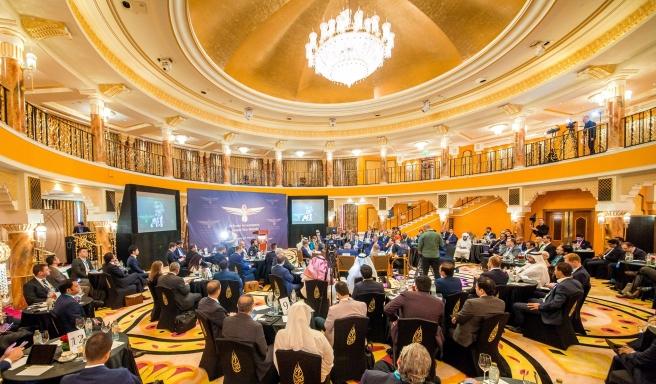

The current global investment environment is defined by a rapid transition toward industrial infrastructure, deep tech frontiers, and strategic reallocation in the face of geopolitical uncertainty. Investors are increasingly pivoting away from saturated digital application layers to prioritize tangible assets, energy-integrated systems, and resilient healthcare innovations across key international markets.
North America: AI Maturation and Infrastructure Supercycles
The North American market is experiencing a massive investment supercycle driven by artificial intelligence, manufacturing, and chip infrastructure. Michael Gobes, Founder and Managing Partner of Hamilton Square Investments, highlights that 'despite public stock market volatility, underlying growth remains robust, exemplified by global chip manufacturing giant TSMC committing $160 billion to build infrastructure within the United States'. While the public chip sector has experienced recent corrections, the foundational demand for physical infrastructure and manufacturing capacity continues to accelerate. Brian Rabben, Founder & Managing General Partner of Rabben Hood Ventures, reflects this shift from software toward physical production, saying he is “primarily interested in the machines that build the machines,” with a focus on dual-use battery technology and manufacturing.
Simultaneously, the composition of technology deal-flow is shifting. Another venture capital investor reports from the Silicon Valley Bay Area that "the market for standard AI application layers and foundational models is reaching saturation". As a result, sophisticated venture capital is shifting focus toward advanced deep tech frontiers, including "highly ambitious long-term projects such as lunar manufacturing and infrastructure development". A private US investor echoes this trend from New York, noting that "traditional fintech, e-commerce, and creator economy portfolios are increasingly being pulled into deep tech segments where true business creation is concentrated". A general partner of a venture capital firm adds that the “application layer” remains attractive, but only where companies bring “proprietary data sets,” verticalized use cases and exposure to highly regulated industries. Vishal Arora, Founder and Managing Partner of PanCosmic Capital, observes that "valuable opportunities exist across the entire AI stack, specifically where platform infrastructure intersects with the underlying energy systems required to feed the computational boom". Another investor takes a more cautious view of generic AI investing, arguing that the real opportunity lies in “specific language models sitting on a standardized data layer,” rather than undifferentiated large language model applications.
Beyond enterprise technology, regional lifestyle and healthcare sectors are seeing targeted activity. Anthony Jarrin, President & CEO of The Cannaregio Group, tracks "a major generational shift toward a highly mobile society, which is driving a real estate transition toward multifamily and flexible living models across Florida, Maryland, and Virginia". In the healthcare space, Bob Sweeney, Senior Venture Partner at Global Health Impact Funds, notes "strong domestic momentum for AI-driven clinical devices that optimize provider workflow, alongside high public interest in advanced pharmacological treatments for pancreatic cancer and expanded vaccine development". This clinical momentum is paired with tactical adjustments by asset managers; Ross Morton, Managing Partner of Nodenza, notes that "family offices are prioritizing highly liquid, fast-turnaround life science investments, specifically focusing on phase 2 trials and immediate product launches".
Europe: Institutional Stagnation and Deep Tech Fragmentation
The European investment landscape presents a stark contrast of high-end research and development coupled with structural bottlenecks. Anneliese Sound, Managing Director of Future Potential Management, warns that "Germany and the broader European Union are falling behind the United States and China in the global AI race". While European corporations are sitting on significant cash reserves and have greenlit technical budgets, "actual deployment is blocked by an extensive wave of CEO and CFO transitions, which paralyzes mid-level decision-making". Furthermore, European data center expansion "faces growing local pushback due to extreme energy consumption, forcing a new industrial standard where operators must supply their own power infrastructure". This macro-environment is further complicated by "the European Central Bank raising interest rates to combat stubborn inflation". Ian Valentine, Private Investor, adds that the idea that “software is dead” is not entirely accurate, warning that AI-built systems still require disciplined product development and clear specifications to avoid weak outputs.
To counter this, European allocation is targeting "localized battery storage solutions to manage fragmented domestic energy grids, alongside early-stage industrialization of quantum sensing tech". Carl Jones, Founder of Inhite Ventures, reinforces the value of specialized tech applications, "focusing capital on AI integration within the cyber security and film sectors, alongside a core thesis in health-oriented longevity technologies". Optimism remains high in specific pockets like Finland; Pasi Pohjala, Founder and CEO of ATG Consulting, reports that "the region is emerging from its economic downturn, with early-stage venture builders working hands-on with university spin-offs to commercialize disruptive innovations in robotics, medtech, and active AI".
Middle East and Emerging Markets: Geopolitical Risk and Capital Flight
Geopolitical factors heavily dictate capital behavior across international hubs. Martin Fritsch, Non-Executive Board Director of COFCO International, highlights that "business operations in the Middle East remain intensely impacted by ongoing regional conflicts involving Iran". In premier financial hubs like the UAE, the primary concern among institutional investors is "the lack of a formal, long-term peace agreement, as temporary quiet is no longer deemed sufficient to sustain predictable market growth".
Consequently, capital from these regions is maintaining a highly global outlook. In Asian markets like Mumbai, India, managers like Ambuj Mathur, Managing Partner of Indite Ventures LLP, are "strictly filtering out speculative or volatile sectors, including logistics, e-commerce, crypto, and hemp, to focus exclusively on resilient, tangible verticals such as advanced pharmaceutical manufacturing and healthcare infrastructure". An India-based investor notes that India is moving beyond its back-office image toward global capability centers, supported by a growing deep tech talent pool and a more disciplined investment environment. Concurrently, investors are identifying emerging defensive havens globally; Anthony Jarrin, President & CEO of The Cannaregio Group, notes "an accelerating shift of population and investment toward South America, specifically tracking real estate and hospitality opportunities in coastal Santa Catarina, Brazil, due to its exceptionally strong per-capita GDP growth and favorable tourism demographics".
Conclusion
Ultimately, success in this climate requires a disciplined focus on tangible utility and structural resilience. As AI integrates deeper into industrial and physical infrastructure, capital is flowing away from speculative ventures toward sectors that demonstrate immediate, scalable impact. Investors who align their portfolios with these foundational shifts, and remain agile enough to navigate regional geopolitical constraints will be best positioned for long-term growth