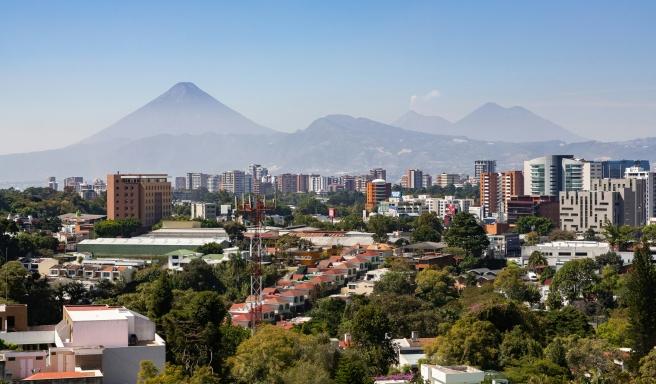
Sanitation is one of the world’s most essential systems, yet it remains one of the least transformed. Billions of people still lack access to safe, reliable, and dignified toilets. In many fast-growing cities, especially across low-income and climate-vulnerable regions, sewer networks are either unavailable, broken, too expensive to build, or impossible to extend into dense urban settlements.
The result is a daily infrastructure failure hiding in plain sight.
Unsafe sanitation is not just about inconvenience. It affects public health, water security, climate resilience, gender equality, and economic productivity. Poorly managed waste contaminates water sources, spreads disease, creates unsafe living conditions, and releases greenhouse gases as it decomposes in pits or unmanaged systems. For women and children, the burden is even heavier. Shared, dirty, or unlit toilets can create risks of harassment, fear, missed school, missed work, and constant anxiety around basic bodily needs.
At the same time, the traditional flush toilet model is increasingly difficult to defend in a world facing water scarcity. Conventional sanitation uses clean water to move waste away, often mixing human waste with stormwater, treated drinking water, and industrial effluent. What could be recovered as energy or fertilizer becomes diluted into a costly waste-management problem. The modern city has spent more than a century perfecting systems that many communities still cannot access and that many future cities may not be able to sustain.
How Loowatt Is Redefining the Future of Sanitation
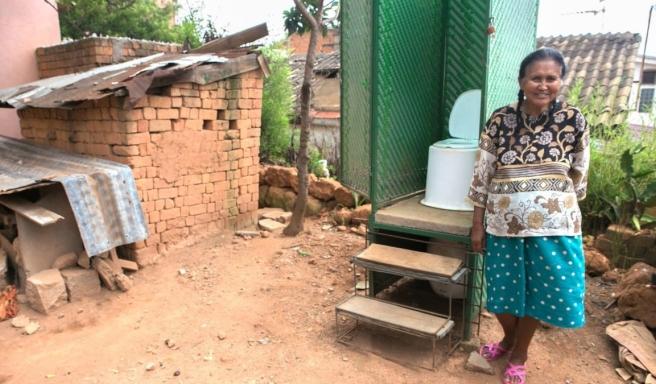
Loowatt has developed a waterless sanitation system designed for places where sewers are not available, affordable, or resilient enough. But the company’s real innovation is not simply a toilet. Loowatt is building a complete sanitation-as-a-service model: a combination of hardware, sealed waste capture, regular collection, logistics, treatment, customer service, and resource recovery.
That distinction is what makes the company especially interesting to investors.
In non-sewered sanitation, the product and the service cannot be separated. A toilet only works if waste is safely contained, collected, transported, processed, and transformed. Loowatt has built its model around this reality. Its toilets use sealed portable containers and regular servicing, giving households a clean, private, and dignified experience without requiring water or plumbing. Instead of offering a compromise for communities outside sewer networks, Loowatt delivers a service people value, use daily, and are willing to pay for.
The company’s circular economy model makes the proposition even stronger. In Antananarivo, Madagascar, waste collected from Loowatt toilets is treated through anaerobic digestion, producing biogas and nutrient-rich digestate. The biogas supports the treatment process, while the digestate is turned into fertilizer for local farmers. This transforms sanitation from a disposal problem into a resource system, connecting households, waste treatment, energy, agriculture, and local economic activity.
For investors, an important recent development is Loowatt’s Resource Extractor, or REx, for which the company recently filed a new patent.
For years, one of the key constraints on scaling the model was the cost and complexity of separating the polymer film used in Loowatt’s waterless flush system from organic waste. That film is critical because it enables a clean and hygienic user experience, but it must be separated before the waste can be safely processed, and the film can be treated in optimal systems like recycling and pyrolysis-to-char. In 2025, Loowatt successfully deployed the REx, a major operational breakthrough. The machine is 95% lower in cost than the previous version, doubles process efficiency, is easier to operate, and improves the quality of downstream organic outputs.
This changes the scale of the story.
Loowatt is no longer only proving that waterless sanitation can work. It has removed one of the barriers that previously limited expansion. Lower processing cost, higher efficiency, and simpler operations make the model more replicable across cities and communities facing similar sanitation challenges.
The commercial model is also compelling. In Madagascar and South Africa, Loowatt operates through monthly household subscriptions, where customers pay for regular collection and container swap. This creates recurring revenue in a sector where demand is essential, constant, and deeply tied to quality of life. The company’s operational performance shows that the model is not theoretical. Its Kaloola operation has demonstrated 99% on-time waste collection, 97% on-time customer payments, and 95% customer satisfaction.
These are the kinds of metrics that matter. They show reliability, willingness to pay, customer trust, and operational discipline.
Loowatt has also proven resilience in extremely difficult conditions. In 2025, its Madagascar operation continued through floods, energy shortages, water shortages, civil unrest, political disruption, transport restrictions, and funding cuts. While many infrastructure models failed under pressure, Loowatt’s service kept running. For investors looking at emerging markets, this is a powerful signal: the company has been tested in real conditions, not just in pilots or controlled environments.
The social impact strengthens the business case. In 2025, 63% of Loowatt’s household customers in Madagascar and South Africa were women. That reflects the reality that women often feel the absence of safe sanitation most acutely and are powerful drivers of adoption when a better solution arrives. Loowatt’s model improves safety, dignity, health, and household wellbeing while creating local jobs across collection, processing, logistics, maintenance, sales, and customer care.
Loowatt sits at the intersection of several major investment themes: climate resilience, water conservation, circular economy, waste management, urban infrastructure, agricultural inputs, and essential services. It is addressing a global problem with a model that combines recurring revenue, operational proof, resource recovery, and scalable technology.
The world does not need another temporary sanitation fix. It needs infrastructure that works where sewers do not, protects water where water is scarce, and turns waste into value.
Loowatt is proving that sanitation can be cleaner, smarter, more resilient, and commercially scalable.