Investors are seeing dramatically different conditions across regions, shaped by government effectiveness, geopolitical exposure, access to talent, infrastructure needs and the ability of companies to turn emerging technologies into commercially valuable solutions.
Across the Asia Pacific, India, the Middle East and Europe, capital has not disappeared. It is becoming more selective. Investors are placing greater emphasis on policy stability, operational resilience, local market knowledge and technologies positioned around essential economic needs. At the same time, international diversification, co-investment and institutional partnerships are becoming increasingly important as investors seek to manage risks that no longer remain confined to individual countries.
Asia Pacific: Policy Execution Becomes a Competitive Advantage
The contrast between Singapore and Australia illustrates how government effectiveness can directly influence investor confidence. Craig Astill, Founder of Castill Group Family Office, described Australia as being in “a transformative period economically and politically,” with considerable change likely over the next 12 to 24 months. Economic and policy pressures are encouraging investors to watch the country carefully for signs of reform, improved business incentives and a more supportive environment for innovation.
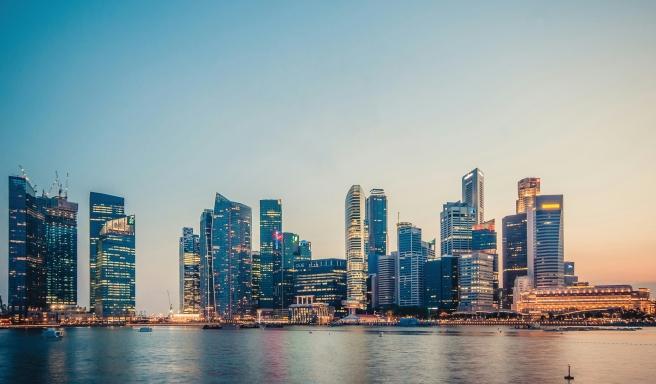
Singapore, by comparison, was presented as a demonstration of what coordinated governance and economic execution can achieve. Craig Astill described the country as “a role model for so many developed countries to actually get their own house in order,” highlighting its ability to support economic growth without many of the political and administrative obstacles affecting other developed markets.
For investors, the comparison points to a broader regional principle: technological capability alone may not be enough to attract long-term capital. Jurisdictions that combine innovation with regulatory clarity, efficient institutions and predictable economic policy are likely to command a growing investment premium. Australia remains a sophisticated market with substantial intellectual and commercial capability, but Singapore is currently being viewed as the stronger example of policy-led competitiveness.
India: Climate Technology, Cybersecurity and Real-Economy Demand
India attracted some of the strongest optimism in the discussions. Investors see the country moving beyond its traditional technology services identity and becoming an important testing and deployment market for climate adaptation, cybersecurity, artificial intelligence and essential infrastructure.
Guneet Banga, Co-Founder and Managing Partner of Parinama Ventures, said there is “a real movement to position India as the climate tech hub for the planet.” The investment opportunity is expected to extend beyond emissions reduction into adaptation technologies addressing food, water, agriculture, energy and the physical consequences of climate change.
This creates an investment thesis built around both domestic scale and exportability. Solutions capable of operating within India’s varied climatic, infrastructural and economic conditions may be well positioned for deployment across other emerging and developed markets. Government engagement, policy development and the creation of broader innovation ecosystems are also expected to support this expansion.
A second opportunity is forming at the intersection of artificial intelligence, cybersecurity and quantum technologies. Subrata Patra, Managing Partner of IdeaCapital, described this as “AI for cybersecurity and cybersecurity for AI,” adding that “the intersection of quantum, cybersecurity and AI is going to be very important.”
The commercial challenge is customer adoption. Subrata Patra noted that cybersecurity frequently represents only a relatively small part of corporate IT budgets, making it difficult for startups to secure customers despite the increasing urgency of the threat. Government support and specialist investment funds may help close this gap, but companies will still need to demonstrate clear economic value rather than relying exclusively on the importance of the technology.
India’s exposure to international trade disruption also creates both risks and opportunities. An investor from India, owner of a shipping company, described how developments around the Gulf and the Strait of Hormuz can abruptly interrupt planned shipping operations. However, he also argued that periods of volatility generate new commercial requirements and create opportunities for businesses capable of responding quickly.
The combined outlook is therefore broader than a conventional Indian technology story. Investors are evaluating the country as a large-scale market for climate resilience, cyber defence, intelligent devices, essential supplies and technologies capable of operating under difficult real-world conditions.
Middle East: Dubai’s Safe-Haven Position Faces a Higher Risk Premium
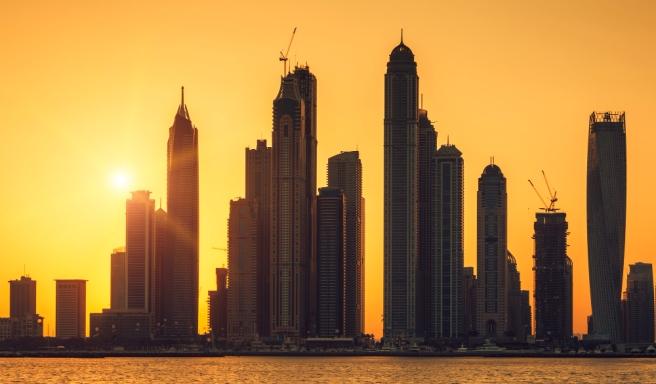
The Middle East presents a more complex balance between resilience and uncertainty. Dubai continues to function as a globally connected centre for capital, business and international talent, but regional instability is affecting the cost and pace of investment decisions.
John Rose, Chairman of Rose Marketing Ltd, argued that the current situation is as much about confidence as direct physical risk. He described Dubai as a “safe, functioning, globally connected place for capital and people,” suggesting that the city could continue to benefit as businesses and individuals seek a reliable operating base within the region.
However, that advantage depends on the surrounding conflict remaining contained. John Rose warned that continued escalation would result in “higher insurance, cautious airlines, nervous travellers, delayed investment, slower deal flow” and “a wider risk premium.”
The UAE and wider Gulf region have substantial financial capacity and experience managing volatility, but investors are becoming more deliberate about timing, exposure and execution. Travel, logistics, tourism and cross-border transactions are particularly sensitive to changing security conditions, even when core commercial infrastructure continues to operate normally.
The immediate outlook is therefore neither a retreat from the Gulf nor unrestricted optimism. Dubai may strengthen its role as a regional centre precisely because it remains functional during periods of disruption. At the same time, transactions are likely to require stronger risk protection, longer decision-making periods and more careful consideration of insurance, supply routes and geopolitical scenarios.
United Kingdom and Western Europe: Economic Pressure, Technological Resilience
Investors described the United Kingdom as a market where macroeconomic and political pressures are challenging traditional businesses, while disruptive technology continues to attract capital.
An investor from the United Kingdom, pointed to rising government spending, regulation and economic uncertainty as significant difficulties. Businesses operating on narrow margins are particularly exposed. Nevertheless, he observed that “the economy keeps ploughing on” and maintained that “if you’ve got good ideas, there are always opportunities and there’s always money out there” to develop them.
This suggests an increasingly divided UK market. Conventional businesses with high operating costs and limited pricing power may struggle, while technology companies offering significant efficiency improvements, new intellectual property or defensible market disruption can continue to raise funding.
A Managing Partner of Fund of Funds, expressed a similarly positive view of the longer-term technology cycle. He argued that investors have “an amazing decade ahead” across technology, biotechnology, healthcare and artificial intelligence. Although current investment levels may eventually produce a market adjustment, companies already generating strong revenue growth demonstrate that the opportunity is not entirely speculative.
The likely outcome is a more selective European technology market rather than a collapse in investment. Capital will continue to pursue companies with measurable commercial traction, while weaker businesses supported primarily by market enthusiasm may find subsequent rounds increasingly difficult. The quality of investment selection, rather than simple exposure to technology, will determine returns.
Central and Northern Europe: Poland Builds Momentum While Finland Tests Governance Assumptions
Poland and Central Europe were presented as increasingly competitive destinations for venture capital and technology development. Patryk Bukowiecki, Managing Director of Apphouse Family, described the Polish investment environment as “very positive, very optimistic,” with “a lot of opportunities” and “a lot of talented people.”
Recent large technology funding rounds, public resources supporting new venture capital firms and the return of professionals from London, Berlin and Stockholm are strengthening the regional ecosystem. Poland also maintains a cost advantage relative to Western Europe while offering technical knowledge and professional capabilities that investors increasingly view as comparable.
This combination of talent, improving capital availability and lower operating costs could make Poland particularly attractive for AI, dual-use technologies, satellite systems and advanced enterprise solutions. The country is not simply positioning itself as a lower-cost development location. It is seeking to build companies, investment firms and technologies capable of competing internationally.
Finland presents a different consideration. Pasi Pohjala, Founder and CEO of ATG Consulting, described a normally quiet Nordic summer being interrupted by controversy surrounding government funding for a major Helsinki arena project. The political debate may intensify as the country approaches parliamentary elections.
For investors, the broader lesson is that governance assumptions require continued scrutiny even in markets recognised for institutional strength and low corruption. Public funding decisions, political relationships and transparency around major infrastructure projects can influence confidence regardless of a country’s historical reputation.
Conclusion: Diversification Is Becoming an Operating Strategy
The common theme across the regions is not a withdrawal from risk but a more deliberate distribution of it. Investors are combining exposure to high-growth technology with jurisdictions offering institutional stability, essential demand and credible routes to commercial deployment.
India is attracting attention through climate adaptation and cybersecurity. Singapore demonstrates the economic value of coordinated governance. Poland is building a stronger technology and venture ecosystem. Dubai remains an important global gateway but carries a growing geopolitical premium. The UK continues to produce investable innovation despite economic pressure, while Australia is entering a period in which policy change could reshape its attractiveness.
Anneliese Sound, Managing Director of Future Potential Management, captured the emerging allocation strategy by predicting that “more and more diversification is going to be happening” alongside “a lot of joint ventures” within institutional investment to reduce risk.
The strongest portfolios are therefore likely to be those that combine international diversification with genuine local intelligence. Capital will continue to move across borders, but it will increasingly do so through trusted partners, co-investment structures and companies capable of proving their relevance within the economic realities of each market.